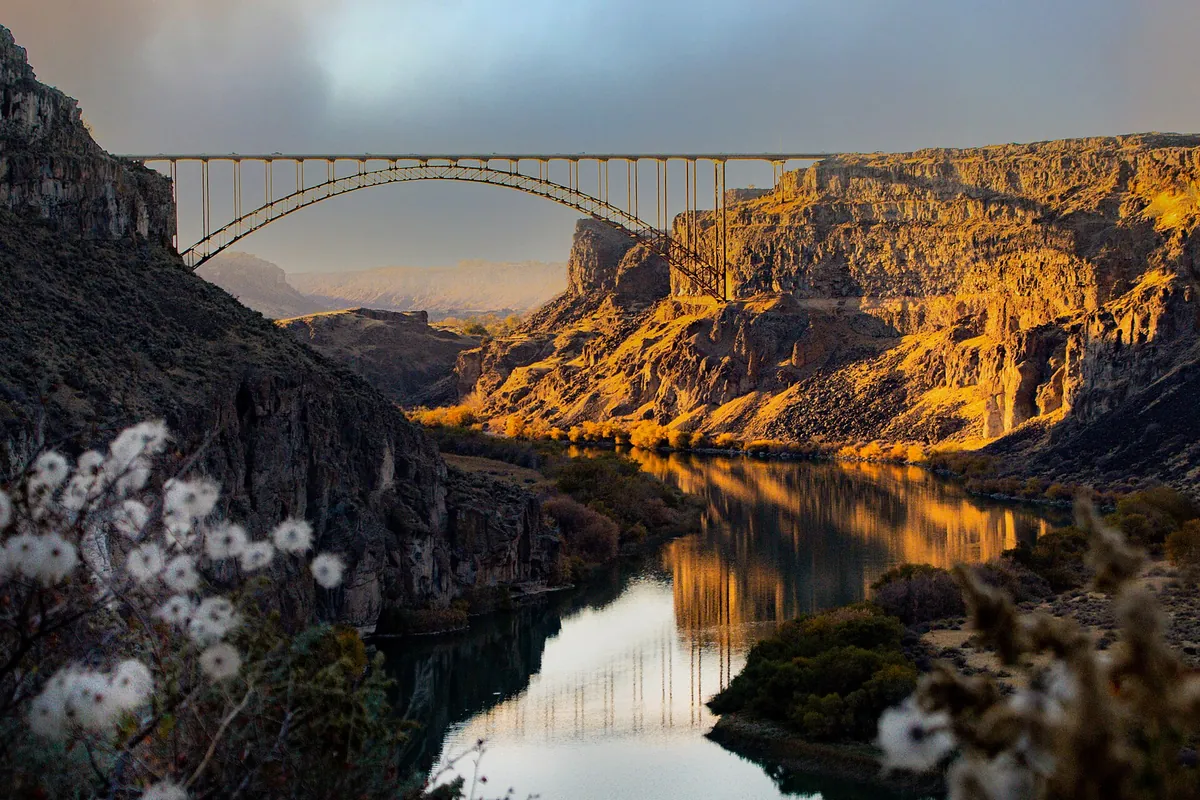
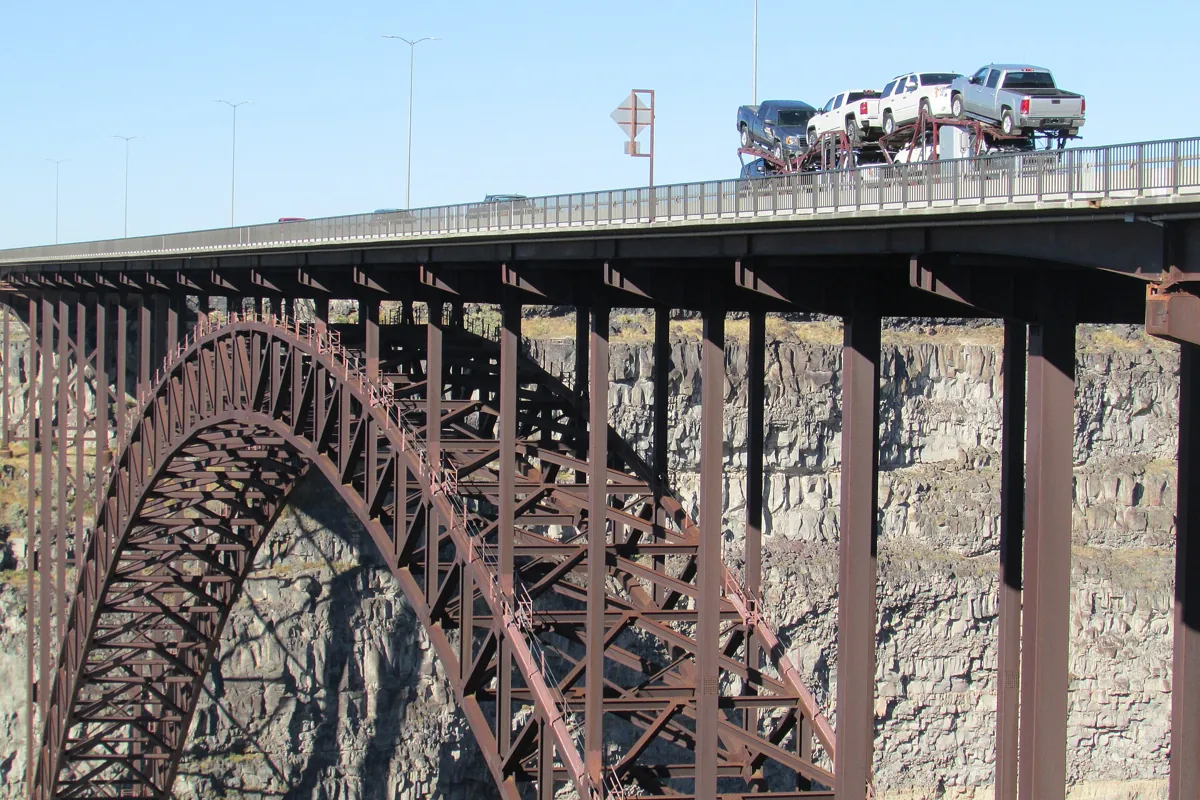
Perrine Bridge spans the Snake River Canyon at the northern edge of Twin Falls, with pedestrian walkways and wide canyon views. The regional tourism bureau lists the bridge at about 1,500 feet long and 486 feet above the river, making it an impressive sightseeing stop even when you are not planning a hike or river outing.
Begin at the Twin Falls Visitor Center beside the south end of the bridge, then decide whether to walk onto the span or explore the rim. Our Idaho things-to-do hub and Twin Falls town guide help place it in a broader trip, while the nearby Shoshone Falls guide covers a separate canyon attraction.
Where should you start?
Visit Idaho identifies a parking area on the south side of the bridge beside the visitor center, with access to canyon-rim trails leading toward the span. This is a more useful starting point than simply entering the bridge name into a navigation app and finding yourself driving across it with no opportunity to stop.
Use designated parking, not the roadway or an improvised shoulder. Once you arrive, consult the local signs and decide which direction you want to walk before setting off. A bridge crossing, an overlook stop and an extended rim walk are different amounts of activity, even though they may begin from the same general area.
Can you walk across Perrine Bridge?
Yes. The state tourism page confirms pedestrian walkways, and the regional tourism bureau describes walking across the bridge. These are walkways beside an active highway, not a car-free promenade. Expect passing vehicles and give other pedestrians enough room rather than stopping a whole group across the available width.
You do not need to cross the full span to appreciate the canyon. If heights, wind or traffic noise make the bridge uncomfortable, choose a rim viewpoint instead. Keep children close, use the railings as boundaries and secure loose items before taking out a phone or camera. Never climb or lean outside barriers for a photograph.
For travelers with mobility needs, confirm the current route surface, curb transitions and any construction with the visitor center before relying on a specific approach. The existence of a walkway does not by itself verify every element of an accessible route from every parking space.
What can you see?
The attraction is the canyon as much as the structure. The bridge offers views along the Snake River corridor, with cliffs, water and developed areas on the canyon floor. Looking back from the rim also reveals the steel arch and the contrast between the high plateau and the river below.
Take time to look in both directions from permitted viewing areas, but do not stop in a spot that blocks other visitors. A camera with a wrist strap can be useful around a high, exposed viewpoint. Stay well behind edges on the rim, including places where the ground appears broad or level.
The Twin Falls Visitor Center
The official visitor center listing describes exhibits about the area’s history and geology, local information and access to the canyon-rim trail system. The historic I.B. Perrine stagecoach is among the interpretive displays described by the regional tourism bureau.
Ask staff for current local guidance if you are planning more than a brief bridge visit. This is particularly useful for choosing another stop, checking a route or understanding a seasonal limitation. Verify current building hours before depending on indoor services; the outdoor viewpoint and the staffed information desk are not the same thing.
What about BASE jumping?
Perrine Bridge is known for BASE jumping, and Idaho’s official tourism page identifies it as a jumping destination. You may see experienced participants preparing or jumping, but a sighting is not guaranteed and should not be treated as a scheduled public performance.
Stay out of preparation areas and do not distract participants. This guide is not an instruction manual or a statement of current legal requirements for a jump. Anyone considering participation should obtain current rules and work with an appropriate professional rather than infer permission or safety from watching someone else.
For most visitors, observing from a normal public viewpoint is enough. Do not move into a restricted or hazardous area to improve a sightline, and never encourage someone to attempt a jump for a photograph. There is plenty to see without making the visit depend on that activity.
When should you visit?
Choose a time when visibility and conditions suit an exposed viewpoint. The canyon can be photographed in different light, but a preferred camera angle should not outweigh wind, ice or poor footing. Carry water and sun protection when appropriate, and have a warm layer available if conditions change.
There is no need to assign an exact duration to every visit. A short stop at an overlook may suit a road trip; a visitor-center stop followed by a rim walk calls for more room in the schedule. Let your group’s interest and comfort determine whether walking onto the bridge adds something worthwhile.
What else belongs on a Twin Falls itinerary?
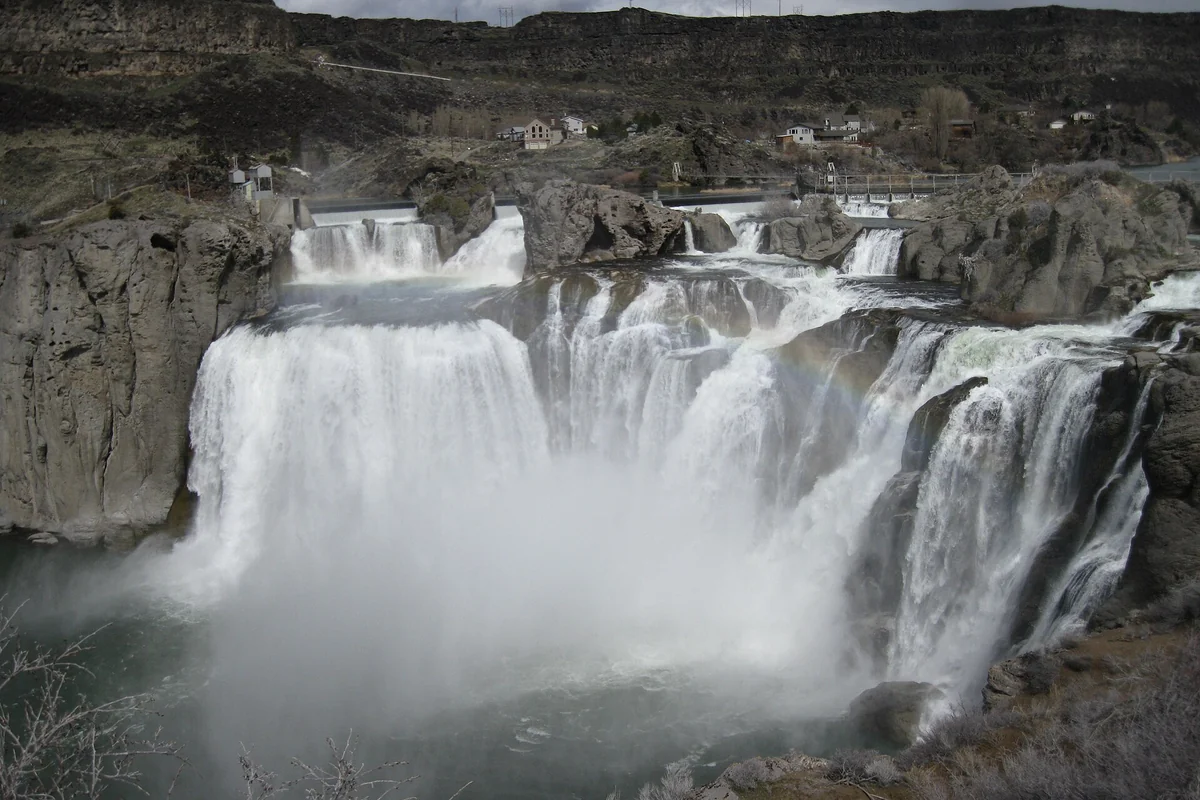
Combine the bridge with Shoshone Falls when the day’s conditions and access suit that visit, but remember they are different sites. Do not confuse a view of the Snake River from the bridge with a view of the major waterfall.
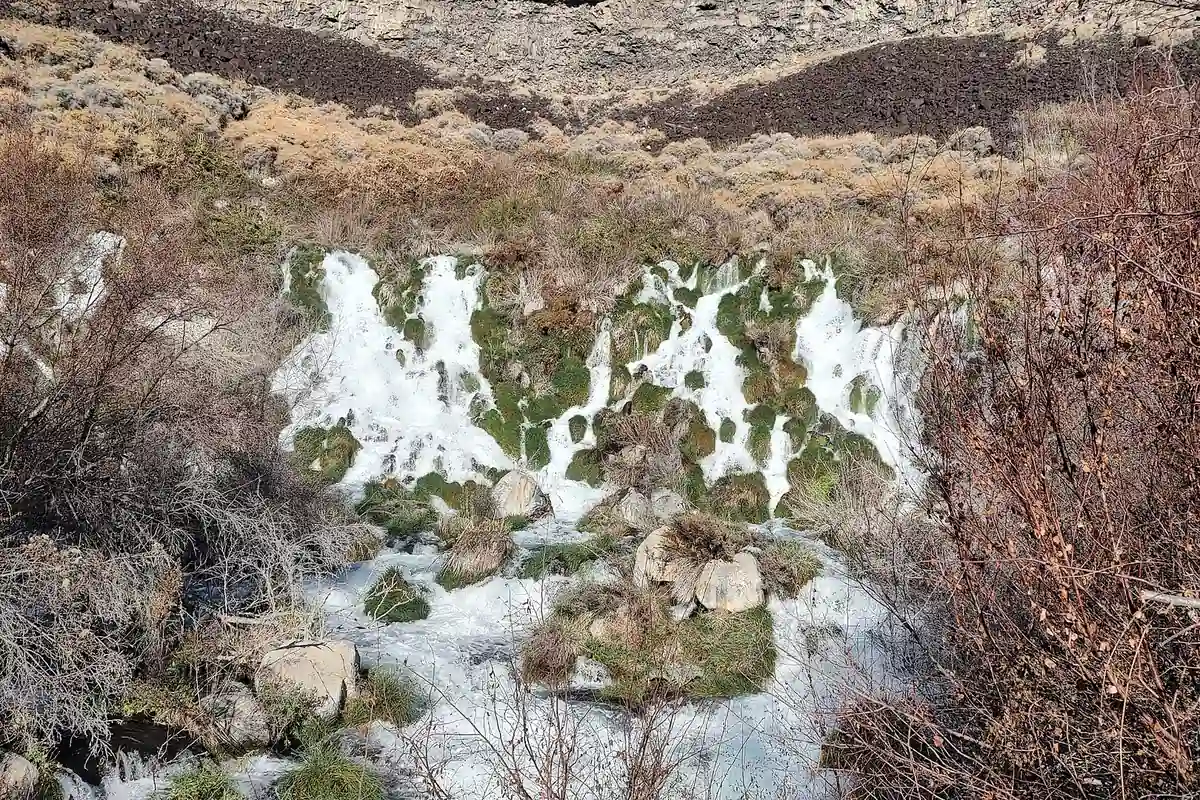
For a longer regional trip, investigate Thousand Springs State Park and Hagerman Fossil Beds National Monument. These need their own driving and visiting plans rather than being treated as extensions of the bridge walkway. The visitor center can help you select a realistic next stop.
If your Idaho road trip also includes Boise, the Boise River Greenbelt is a separate river-walk option to research for that city. Do not expect the Perrine Bridge approach to provide the same experience as a dedicated riverside path: choose your walk for the setting, exposure and comfort level you actually want.
A good Perrine Bridge visit is simple: park properly, orient yourself at the south rim, enjoy the canyon from a suitable public route and leave time for the next destination. The strongest view is not worth ignoring a railing, closure or uncomfortable member of your group.
Questions before you go
Can you walk on Perrine Bridge?
Yes. The bridge has pedestrian walkways. It remains an active highway crossing, so stay within the railings and use the designated pedestrian approaches.
Where is the visitor center for Perrine Bridge?
The Twin Falls Visitor Center is beside the bridge’s south end, with parking and access to canyon-rim trails. Check its current hours before relying on indoor services.