Grand Teton National Park is in northwestern Wyoming, not Idaho, but eastern Idaho is a practical starting point for a visit. From Idaho Falls, Driggs or Island Park, the key planning task is choosing a road route that is open and appropriate for your vehicle. A short-looking line across the Teton Range is not necessarily a road into the park.
This is an Idaho-gateway guide, not a promise of quick access from every Idaho town. The National Park Service warns that travel between park entrances can take hours and that some entrances have seasonal limits. Plan the approach, the park day and the return drive as three separate parts of the itinerary.
Which Idaho base makes sense?
Idaho Falls works as a broader eastern Idaho travel base, but a Grand Teton outing still requires a substantial driving commitment. Driggs puts you on the Idaho side of the Teton Range; you still have to drive around the mountains to the park's main valley-side roads. Island Park often fits a Yellowstone-centered trip better than a quick Grand Teton day.
Choose the base that matches the whole trip rather than comparing room rates alone. If most of your time will be in Grand Teton, compare staying closer to the park with making repeated round trips from Idaho. If Yellowstone is equally important, read our Yellowstone from Idaho guide before arranging the order of your nights.
From Idaho Falls: compare the two approaches
The NPS directions page tells travelers from Idaho Falls and eastern Idaho to head toward Victor and consider either Teton Pass or the Snake River Canyon approach. It specifically identifies season, vehicle size and driving experience as reasons to choose carefully. A routing app's fastest suggestion should not override those factors.
Through Victor, the Teton Pass approach crosses into Wyoming toward Wilson and the Jackson area. The canyon alternative approaches the Jackson Hole valley from the south. Check current restrictions before choosing either, particularly with a trailer, motorhome or unfamiliar rental vehicle. Do not copy a summer passenger-car itinerary into a winter RV trip.
No fixed drive time is supplied here because an official, gateway-specific time was not verified. Before departure, obtain a current route estimate to your actual destination, such as Moose or Jenny Lake, not simply “Grand Teton.” Then add time for stops and delays. Arrival at the park boundary is not arrival at the trailhead you intend to use.
From Driggs and Victor: the range is not a shortcut
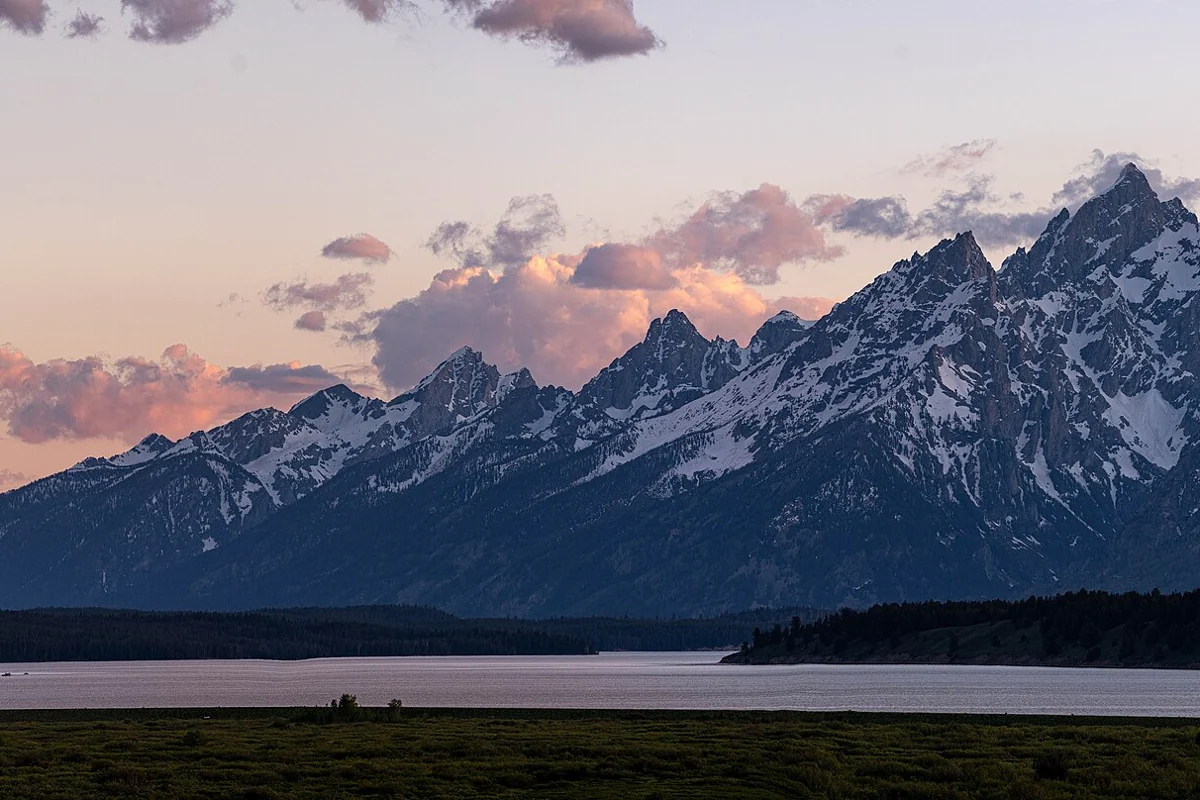
Driggs and Victor are useful Idaho communities for a Teton-region trip, but their mountain views can be misleading when estimating park access. The principal park roads and familiar lake stops are on the Wyoming side. Plan on a road approach around the range, not a drive through a hiking trailhead on its west side.
After the pass approach, avoid assuming that Moose-Wilson Road is always the obvious next step. NPS describes it as a narrow corridor with seasonal closures and vehicle restrictions; RVs and trailers are prohibited. Check its current official description and road status before adding it to a route. A larger-road alternative may be the correct choice for your vehicle.
From Island Park: treat Yellowstone access as seasonal
If you are combining the parks, a route through Yellowstone and its South Entrance can connect to Grand Teton via the John D. Rockefeller, Jr. Memorial Parkway when the necessary roads are open. This is not a dependable year-round through route. Confirm each relevant road segment rather than reading “park open” as “all connections open.”
A Yellowstone sightseeing day followed by a late drive into Grand Teton is also not equivalent to a direct transfer. Wildlife stops, congestion and changing weather can expand the day. If the northern connection is unavailable, reassess the entire route instead of attempting an unsigned back-road shortcut. The Idaho parks planning hub offers other destinations if the seasonal itinerary no longer works.
For a separate Idaho park day rather than another long transfer, compare Harriman State Park. It belongs in an Idaho-side itinerary on its own terms, not as a stand-in for Grand Teton's mountain roads. Confirm the park's current activities and access before adding it to the schedule.
What to do on a first visit
For a first day, choose a few stops in one part of the park. At Moose, the Craig Thomas Discovery and Visitor Center provides orientation, exhibits and ranger information when operating. Use it to ask about the day's weather, trail conditions and access before committing to an unfamiliar hike.
Jenny Lake is a logical lake-and-mountain destination, but its popularity makes parking part of the plan. NPS reports high peak-period waits at the Jenny Lake lot. Arrive with a fallback stop rather than circling indefinitely or parking outside designated spaces. Boat services and visitor facilities are seasonal; do not build a hiking route around a shuttle without verifying its current operation.
For a less trail-dependent visit, combine designated scenic pullouts with time at Moose and a lake shoreline. That can be a complete day, especially with an Idaho return drive. Do not treat every viewpoint as mandatory. More driving does not necessarily improve a visit if it leaves no time to get out of the car.
A realistic one-day structure
- Before leaving Idaho: check the approach road, park road map, forecast and destination parking information. Carry food and water so a delayed lunch is not a crisis.
- On arrival: orient at an operating visitor facility or a designated information stop. Confirm whether your planned hike fits current conditions.
- During the main part of the day: choose one substantial activity, then add nearby overlooks only if time and energy permit.
- Before the return: check the route again if weather has changed. Keep a turnaround point instead of letting every extra stop push the drive later.
Two days allow more flexibility than a single long day from Idaho Falls or Island Park. One day can still work if you keep the scope narrow. A high-country hike, a full lake visit, a wildlife search and a long scenic loop are competing priorities, not four automatic inclusions.
Seasonal roads change the visit
The NPS road-status page is essential. Teton Park Road's central sightseeing section and Moose-Wilson Road have winter closures, while the main highway corridor has a different winter operating pattern. Even where a road is plowed, ice, snow and wildlife can make travel difficult.
Spring may bring snowbound trails and limited services; fall can bring closures before travelers expect them. Summer offers a wider range of services but also busier parking. Check the official operating calendar for the exact trip dates instead of using a generic month-by-month itinerary as an opening guarantee.
Wildlife, bears and pets
NPS requires visitors to stay at least 100 yards from bears and wolves and 25 yards from other wildlife. Use designated pullouts, keep animals' escape routes clear and never approach for a closer photograph. Carry appropriate bear-safety equipment and understand its use before heading onto trails; ask a ranger if you are unsure about current guidance.
Pets are not substitutes for hiking companions here. Under the park's pet rules, they are generally limited to places vehicles can go, with additional restrictions. They are not allowed on park trails. Plan a pet-compatible day before arrival, and never rely on leaving an animal in a parked vehicle during a long activity.
Fees, camping and the last checks
Check the NPS site for current entrance fees and pass rules; no ticket amount is assumed here. Park campgrounds require advance reservations, and camping or sleeping in a vehicle is not allowed in pullouts or ordinary parking areas. If camping is part of the trip, secure a designated site instead of hoping to improvise after dark.
The map point for this guide marks the Craig Thomas Discovery and Visitor Center parking area at Moose, using NPS coordinates. It is a planning anchor, not a recommendation to ignore closures. Before setting out, verify roads, services and the return route one final time.
Questions before you go
Is Grand Teton National Park in Idaho?
No. It is in northwestern Wyoming. Idaho Falls, Driggs, Victor and Island Park can be starting points for a visit, but visitors must plan a suitable road approach.
Can you drive straight through the Tetons from Driggs?
There is no direct park road across the range from a west-side hiking trailhead. Use an appropriate public-road approach and check current restrictions.
Can you drive from Island Park through Yellowstone to Grand Teton in winter?
Do not assume that connection is open to ordinary vehicle travel. Check current Yellowstone and Grand Teton road status; seasonal closures can make the through route unavailable.